In brief
A devastating tornado that hit southeastern North Dakota has been upgraded to an EF5 classification, the strongest known, following a detailed assessment of its damages. The tornado, which struck on June 20, resulted in three fatalities and extensive destruction, including uprooted trees, destroyed farmsteads, and even toppled rail cars. It bore winds estimated at 210 mph and made a path over 12 miles, prompting a thorough investigation to confirm its severity.
A deadly tornado that tore across southeastern North Dakota this summer has been upgraded to an EF5 with winds topping 200 mph (322 kph), the strongest classification of tornado and the first on American soil in a dozen years, meteorologists said Monday.
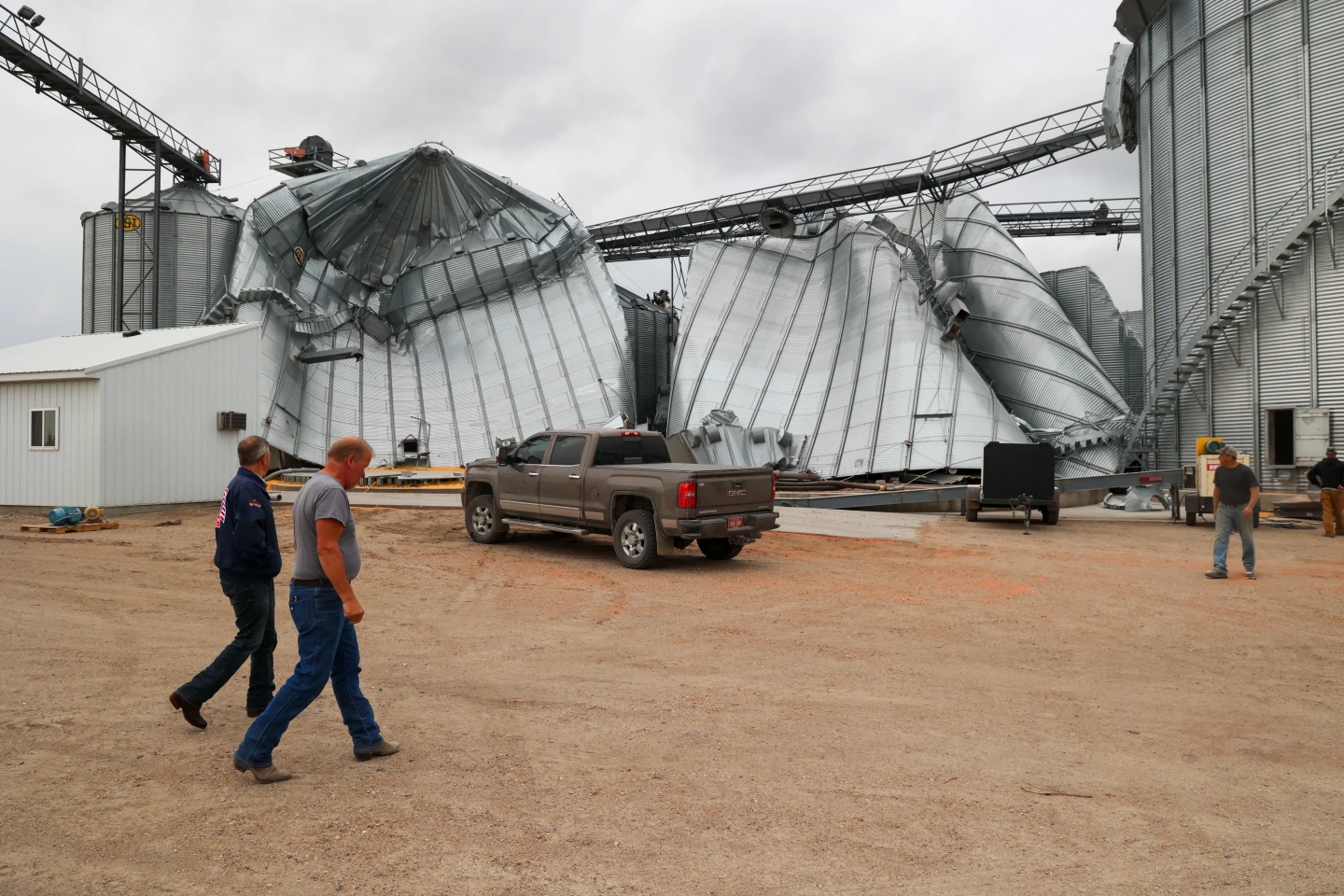
The June 20 twister in Enderlin killed three people and caused significant damage. At its largest, the tornado was 1.05 miles wide (1.7 kilometers) and carved a path across the prairie for just over 12 miles (19 kilometers). Meteorologists from the National Weather Service office in Grand Forks estimated the tornado’s winds reached 210 mph (338 kph), according to the newly released analysis.
The 1999 Bridge Creek-Moore tornado in Oklahoma holds the record of the strongest winds ever recorded in the U.S. at 321 mph (517 kph).
Since the agency began using Enhanced Fujita scale in 2007, there have been 10 tornadoes categorized as EF5. The 12-year gap between EF5s is the longest since the National Weather Service started keeping records in 1950.
“In the last kind of 12 years, there’s been several strong tornadoes that have come close, but there haven’t been known damage indicators at that time to support the EF5 rating,” said Melinda Beerends, meteorologist in charge at the National Weather Service in Grand Forks. “It’s hard sometimes to get tornadoes to hit something.”
The twister destroyed farmsteads, tipped over fully loaded rail cars, toppled transmission towers, and uprooted trees. Meteorologists from the Grand Forks office headed into the field the next morning to assess the damage.
Determining a tornado’s strength usually takes days or weeks, as meteorologists study the damage to buildings and trees. In this case, it took much longer due to unusual damage to rail cars, including one that was picked up and hurled far from the rest. The meteorologists worked with engineers and wind damage experts to conduct additional surveys and forensic analysis to determine the EF5 rating, up from the initial estimate of EF3.
The tornado was caused by warm, moist air in a place that’s ripe for a thunderstorm, Beerends said. But there was also a high amount of wind shear, which is a variation of wind speed and direction that created the conditions for the tornado.
Two men and a woman were killed at two locations near Enderlin, about 40 miles (65 kilometers) southwest of Fargo. Thousands of homes lost power during the storm. One farmstead had its foundation swept clean, with just the basement remaining and debris scattered downwind.
The last recorded EF5 tornado was on May 20, 2013, in a town outside Oklahoma City, killing 24 people and injuring more than 200 others. That tornado tore through hundreds of homes, a school, hospital, and bowling alley in Moore.