In brief
Ahmed al-Sharaa, leader of Hayat Tahrir al-Sham (HTS), navigates backlash on social media following a photo incident that highlights the challenges of unifying Syria's diverse populace.
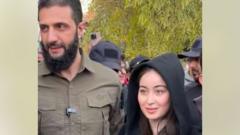
Syria's rebel leader Ahmed al-Sharaa has publicly rejected the uproar surrounding a recent incident involving a photograph with Lea Kheirallah, emphasizing that he did not compel her to cover her hair before taking the picture. This event, which occurred in Damascus last week, has ignited a firestorm of criticism from both liberal and conservative commentators, reflecting deep-seated concerns about Syria's evolving political landscape following the rebels’ ascendancy.In an interview with the BBC's Jeremy Bowen, Sharaa attempted to clarify the situation, saying, "I did not force her. It’s my personal freedom. I want photos taken for me the way that suits me." Meanwhile, Kheirallah defended the rebel leader, stating that his request, which was made in a "gentle and fatherly way," was reasonable: "The leader has the right to be presented in the way he sees fit."The incident has spotlighted the complexities facing any future leadership in Syria where multiple religions coexist, including Sunni Islam, Christianity, Alawism, and others. There exists a significant ideological schism among various political factions and armed groups, some advocating for a secular democracy, while others push for governance influenced by Islamic law.HTS, a group formerly linked to al-Qaeda, had previously enforced strict behavioral and dress codes in Idlib province since its takeover in 2017, though has since rescinded those rules due to public backlash. Interpretations of the Quran suggest that while both men and women are expected to dress modestly, the definitions of modesty can significantly vary across cultural and sectarian lines.The controversial photo was taken on December 10, during Sharaa's visit to Mezzeh, Damascus. Before the photo, Sharaa gestured for Kheirallah to cover her hair, which she did by raising the hood of her jumper. This seemingly innocuous act quickly became the subject of intense scrutiny, with videos and snapshots circulating widely on social media.Critics, particularly those with liberal or progressive views, have expressed alarm over the implications of such requests, seeing it as indicative of a potentially conservative regime under HTS. France 24's Arabic channel even queried whether Syria was "heading towards Islamic rule." Some commentators referred to the leadership change as merely replacing one dictatorship with another.On the other hand, Islamist hardliners criticized Sharaa simply for being photographed with a woman not directly related to him. Accusations flew on platforms such as Telegram, where they labeled Kheirallah as "mutabarijah," a term carrying a negative connotation for women deemed immodest.The mixed reactions from the public and media underscore the challenges HTS and other factions face in navigating Syria's intricate socio-political tapestry, where sentiments around freedom, modesty, and governance diverge starkly. As the nation moves further from Bashar al-Assad's regime, the balance that leaders like Sharaa must strike will be critical in shaping Syria's future trajectory.