China Censors Public Mourning During Premier Zhu Rongji's Funeral
Flags at key government sites had been lowered to half‑mast, and security vehicles were parked through the heart of Beijing as China mourned the 97‑year‑old former Premier Zhu Rongji.
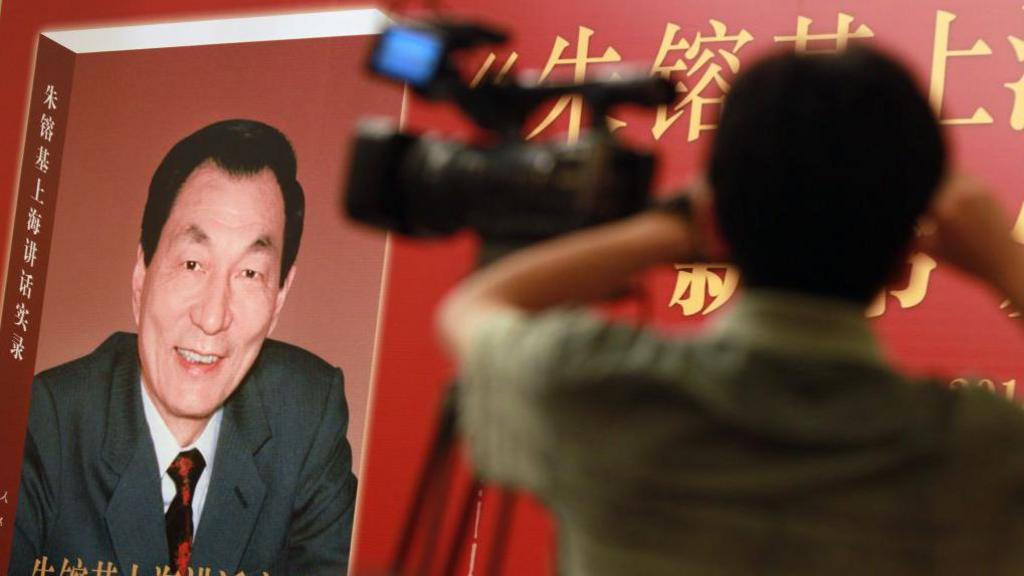
Zhu died of an illness last week and was cremated in a low‑key ceremony in Beijing on Tuesday. The event was attended by President Xi Jinping, Premier Li Qiang, former President Hu Jintao and other senior officials, but no footage has been released to the public.
Zhu, who led China as Premier from 1998 to 2003, is hailed as one of the country’s most significant economic reformers, steering the nation through painful restructuring of state‑owned enterprises, a commercial property boom and the country’s entry into the World Trade Organization.
The state media has praised him as an "outstanding member of the Chinese Communist Party" and "time‑tested and loyal Communist fighter," while simultaneously censoring online tributes that could evoke criticism of the present regime.
An essay by economist Zhao Jian, which remembered the era as a time of "proper poverty" but clear prospects, was posted on WeChat and removed the day after its publication. The Chinese Party has historically been wary of public reaction to the deaths of senior figures, fearing potential unrest.
The funeral came just days before the Communist Party leadership convened to commemorate the birth anniversary of former President Jiang Zemin, who died in 2022. Both leaders belonged to the same generation that ushered China into a more open, global‑market era, a period that sparked widespread nostalgia among many Chinese for a time of possibilities.
In a 40‑minute speech, President Xi urged the Party to carry forward Jiang's legacy and warned that the current leadership must "heighten vigilance against potential dangers" while "proactively meeting major tests posed by high winds and rushing waters".
While the deaths of Zhu and Jiang signal the die‑hardness of the 1990s and early‑2000s reform boom, they stand in stark contrast to the current trajectory of state‑driven economic policy and tight political control under Xi.
Professor Kerry Brown of King’s College London notes that Xi has "put forward a unified historic narrative" and that any idea of a divergent future path is "not allowed a public airing." Yet China now faces challenges: slower growth, demographic decline, falling house prices and high youth unemployment.
The mourning of a bygone era therefore echoes a broader yearning for the certainty that hard work in the past promised prosperity, a certainty that is increasingly eroding in the present.
In this landscape, the state’s effort to control the narrative around Zhu Rongji’s funeral reflects a broader strategy to keep public grief from morphing into political dissent.