POINTE-AU-CHIEN, La. — Cherie Matherne looked out into Bayou Pointe au Chien, wide enough for several boats to pass through. In the distance, a stand of dead trees marked where saltwater comes and goes during storm-driven flooding.
It wasn’t always this way. The bayou was once shallower and just wide enough for a small boat to pass. Land that cattle once roamed is submerged now, and elders tell stories of tree canopies so lush they nearly shut out the day.
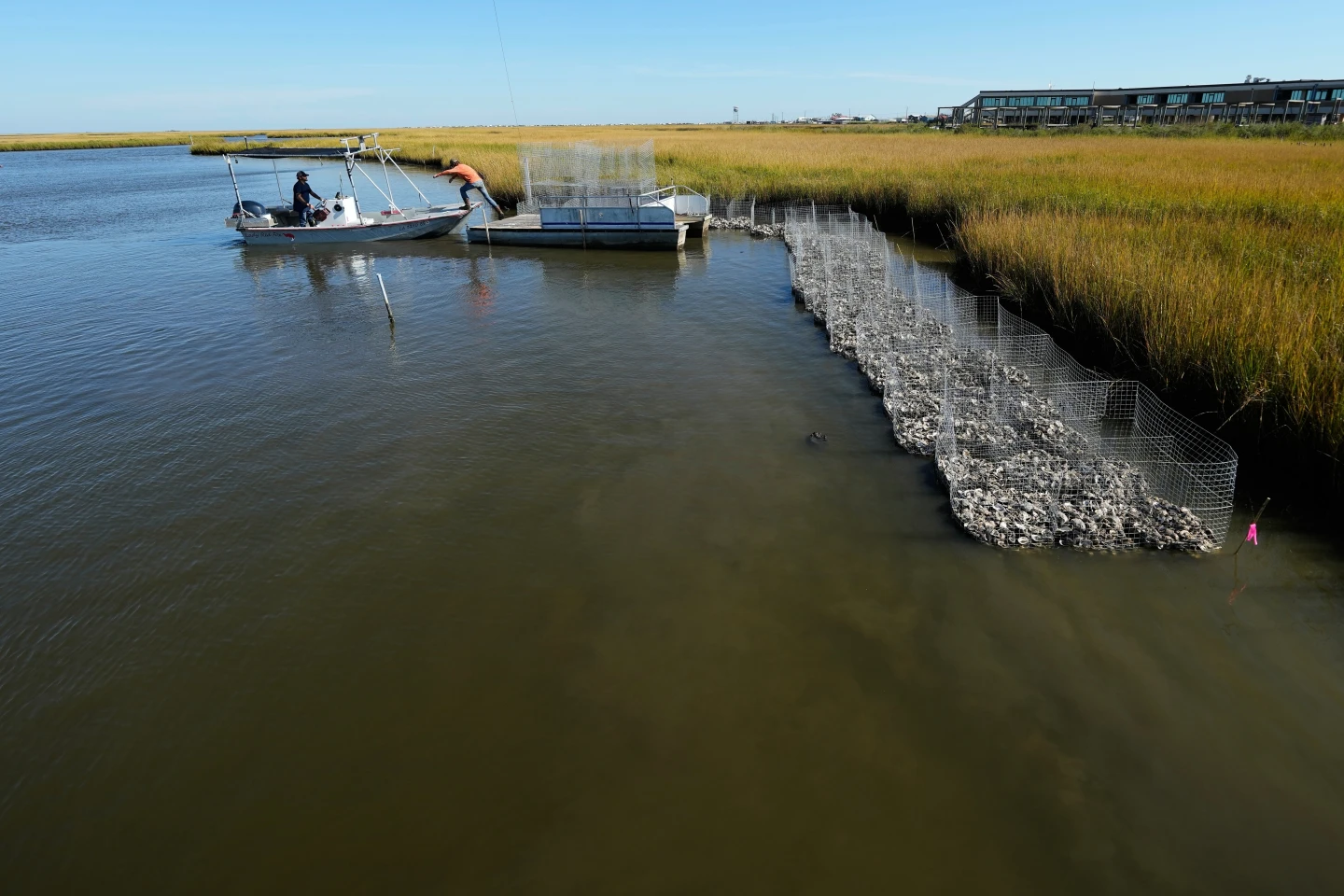
The delicate lattice of Louisiana’s coastline has been steadily retreating for generations. As it does, the Pointe-au-Chien Indian Tribe and other Indigenous people are fighting to protect what’s left and to adapt to their changing environment. That includes a painstaking effort to build makeshift reefs that slow erosion and sturdier homes and buildings to withstand storms.
“We want to be able to make it so that people can stay here for as long as possible, for as long as they want to stay,” said Matherne, the tribe’s director of daily operations.
What’s eating away at the Louisiana coastline
Louisiana’s coastline faces various threats, including levees that disrupt natural sediment flow, saltwater intrusion from canals, groundwater pumping that causes land subsidence, and climate-driven sea level rise.
Since the 1930s, the state has lost about 2,000 square miles of land. Without significant action, experts estimate that over the next 50 years, Louisiana could lose up to 3,000 square miles, threatening traditional ways of life.
In response, the tribe is engaged in initiatives like rebuilding historic mounds with oysters, indicating a practical approach to future coastal defenses. They have seen success, with a 50% reduction in land loss rates from reef installations.
Reinforcing Community Safety
In light of increased storm threats, such as Hurricane Ida in 2021, the Pointe-au-Chien have fortified homes with hurricane-resistant materials and help from local organizations. They aim to create a safe environment for families and ensure a sustainable existence for their community as they face dramatic environmental changes.
The Fight for Federal Support
Despite their challenges, the tribe’s fight for federal recognition and support to secure grants goes on. Local collaborations with organizations continue to be vital as they seek to address these issues in sustainable ways.
As evident in the words of elder Theresa Dardar, the cultural connection to the land remains strong. “This is where our ancestors were, and we feel like we would be abandoning them to leave,” she stated.