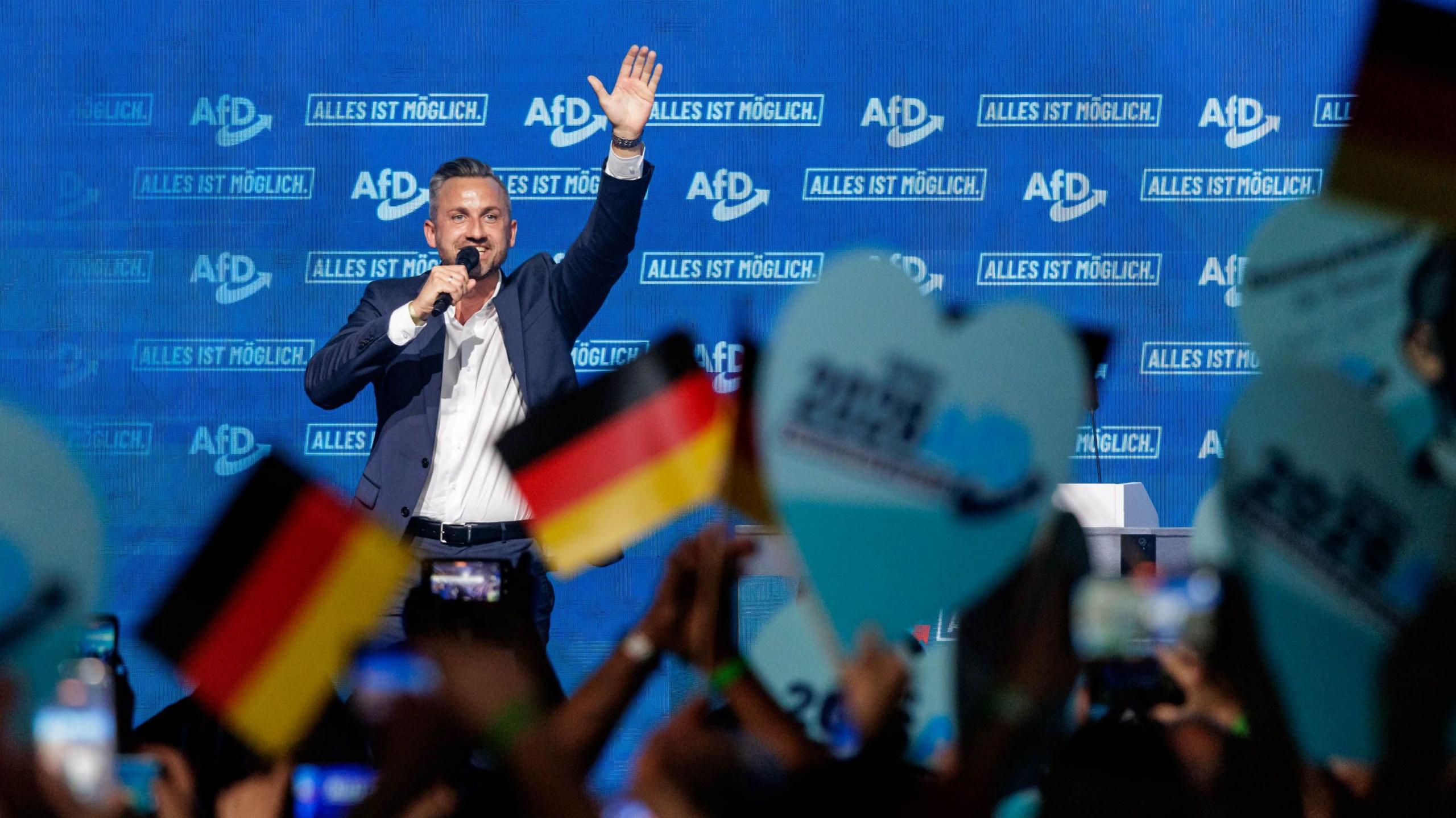
The far‑right Alternative for Germany (AfD) sits almost on the threshold of governing a German state after a historic vote in Saxony‑Anhalt.
Cast preliminary results show the AfD captured 43.8% of the vote, falling just three seats shy of an outright majority in an 83‑seat parliament. At a press conference on Monday, party leader Ulrich Siegmund heralded a “clear mandate” and opened talks with other parties, calling for broad consultation rather than outright exclusion.
Beatrix von Storch, the AfD’s deputy parliamentary leader for the state, urged her rivals to engage in dialogue, arguing that ignoring the electorate’s choice would lead to “chaos” or a second election. She highlighted that the party’s positions could influence policing and local education, key policy areas within state authority.
The CDU, Germany’s dominant centre‑right party, gained 17.2% of the vote and is now navigating the complex decision of whether to support or confront the AfD. Earlier this week, CDU representatives expressed anger at their party’s possible stance, a sentiment echoed by the AfD’s outreach to hard‑line CONGOs.
The AfD’s standing in Saxony‑Anhalt has prompted a distinction by domestic intelligence: the party is labelled “right‑wing extremist” but rejects that categorisation. The leader maintains that any political stance is a responsibility of the state and that AfD will not “renounce peace” or democracy.
If the AfD secures a majority by pairing with smaller groups or independents, it would hold significant influence over policing, education and local infrastructure—areas that have historically been shielded from far‑right influence. This unprecedented proximity to power raises urgent questions for German political institutions and the rule of law.