In brief
The flooding caused by Typhoon Noul has exposed a new danger for Chinese authorities: a surge of AI‑generated fake videos that distort disaster scenes and incite panic. Chinese officials have begun arresting creators of false reports, citing legal penalties that can reach up to seven years. Multiple experts warn that AI technology outpaces current detection methods, making it harder to distinguish real from fabricated content. The government is urging stricter regulation of social media platforms, the build of trusted information infrastructure, and a public education campaign to combat digital misinformation.
The looming threat of AI‑generated misinformation in disaster zones
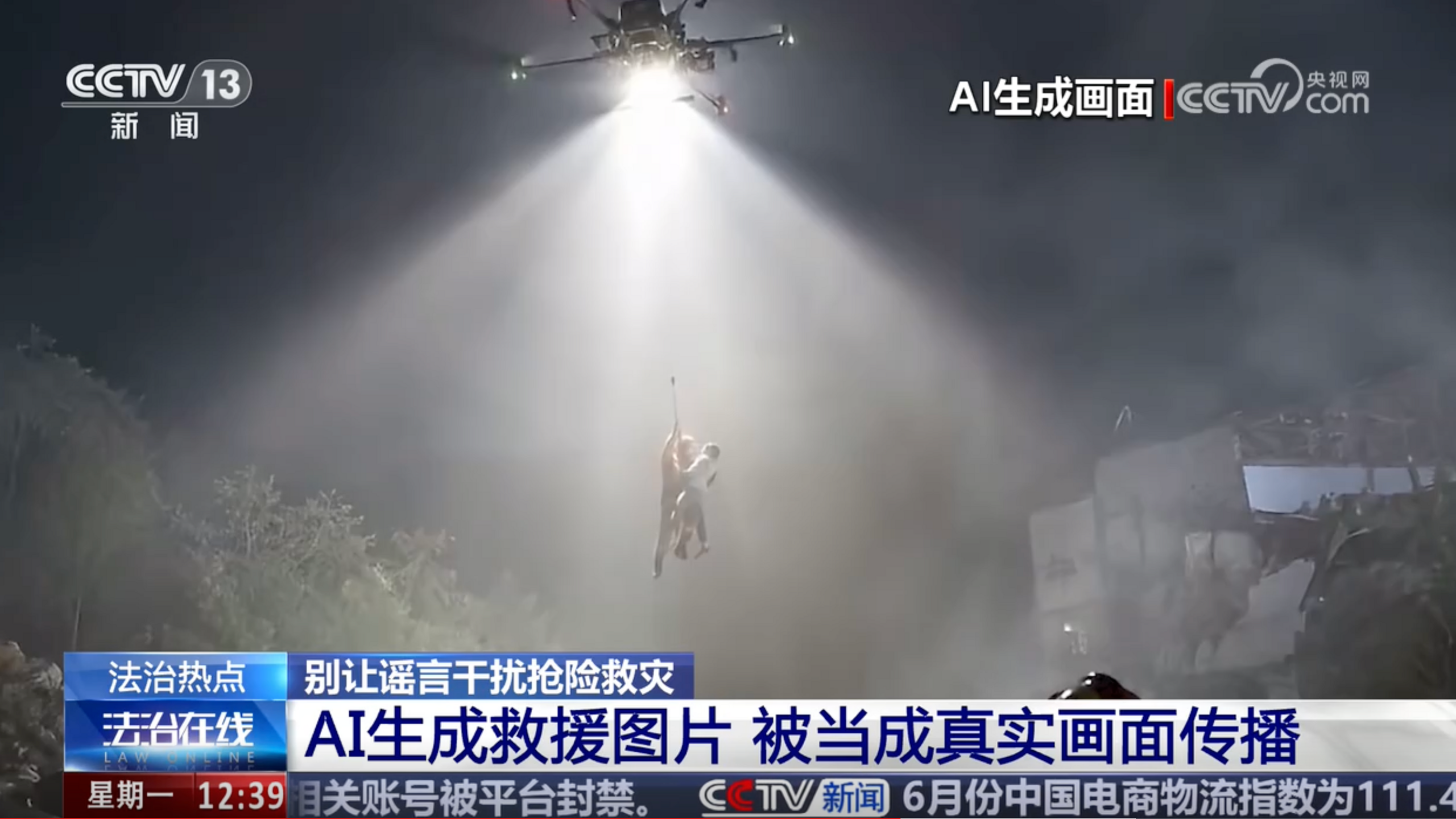
As Typhoon Noul sweeps across southern China, authorities are confronting a disturbing wave of AI‑created videos that paint a false picture of the damage. These doctored clips—frequently depicting dead bodies, unfounded flooding, or staged rescue scenes—are spreading rapidly on social media platforms and stirring public panic.
Officials have begun criminal proceedings, imposing fines and up to seven‑year prison terms on those producing such content. “When disaster‑related information from an unknown source surfaces, we urge people to verify it with official announcements,” said Gao Kai from the Ningbo Public Security Bureau, stressing that enforcement will intensify.
Experts emphasize that AI tools have lowered the barrier to creating realistic fabricated content, making false reporting easier than ever. Professor Chen Bin notes that these videos can be generated with only a simple prompt, producing “highly realistic but entirely fabricated” material on a large scale.
The crackdown is not just about legal action. The Cyberspace Administration has ordered a nationwide effort to detect fabricated data, malicious editing, staged scenes, and misattributed events. Meanwhile, platforms are urged to enhance content review systems and enforce AI‑watermarking standards.
With China’s massive investment in AI and a rapid increase in the number of AI companies—over 6,000 according to Xinhua—there is a pressing need for a trusted information infrastructure. This would include early‑warning systems and disaster interfaces that news organisations can access, ensuring accurate reporting during crises.
Despite legal measures, scholars caution that AI misinformation evolves faster than regulation can keep pace. The risk of misinformation spreading unchecked across political, health, and emergency scenarios remains a critical challenge for governments and platforms alike.