
In brief
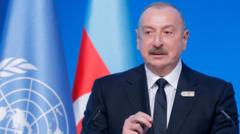
At the start of COP29, Azerbaijan's President dismissed criticism surrounding fossil fuel production, labeling oil and gas as divine gifts while calls for emission reductions grow stronger worldwide.
In a bold statement at the COP29 climate conference, Azerbaijan's President Ilham Aliyev referred to oil and gas as a "gift of god," defending his country's decision to leverage fossil fuels for economic growth. Aliyev's comments came amid increasing international scrutiny of the environmental implications of fossil fuel reliance. He articulated that nations should not face criticism for possessing natural resources and emphasized that the market reflects a need for these resources.Alongside his remarks, UN Secretary-General António Guterres warned against the continuance of fossil fuel use, emphasizing the pressing need for a transition to clean energy. Guterres highlighted that time is running out in the race to limit global temperature rises to 1.5 degrees Celsius, calling for a new financial commitment from wealthy nations to support developing countries in implementing climate strategies.The backdrop of COP29 is further complicated by the recent election of Donald Trump in the US, a figure known for skepticism regarding climate change. This political shift brings an air of uncertainty, as the Biden administration's climate efforts may be jeopardized. Following Trump’s election, Biden's envoy reaffirmed a commitment to global climate agreements that had been established prior.Concerns also linger about Azerbaijan's role in the climate talks, particularly given the background of its Minister for Ecology and Natural Resources, a former oil executive. Critics suggest that the conference may serve as a platform for advancing Azerbaijan's fossil fuel interests, however, the government claims it is a victim of "Western fake news" aimed at discrediting its environmental record.Aliyev asserted that Azerbaijan's carbon emissions are minimal, at merely 0.1% of global levels, and denounced the dissemination of misinformation about the country’s commitment to climate action. Meanwhile, UK Prime Minister Sir Keir Starmer announced elevated emission reduction targets for the UK, positioning it as a leader in the transition to a cleaner economy.As discussions progress, it remains to be seen if COP29 can yield meaningful agreements, especially in the context of calls from developing nations for financial assistance to tackle climate change impacts. The complexities of international politics and national interests make consensus on climate action a challenging prospect, heightened by alarming predictions for 2024 being marked as a potential record-breaking year for global warming.
