
In brief
In a long-awaited decision, Romania and Bulgaria are set to join the Schengen Zone on January 1, 2025, allowing travel without border checks. While this promises a smoother experience for citizens, truck drivers may still face some bureaucratic challenges at key crossings.
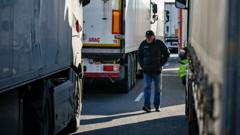
Seventeen years after their accession to the European Union, Romania and Bulgaria will officially become part of the border-free Schengen travel zone starting January 1, 2025. This milestone has been highly anticipated, bringing joy to the estimated 25 million residents who can now enjoy unrestricted travel to countries like France, Spain, and Norway without the need for a passport. European Commission President Ursula von der Leyen heralded the announcement as a "day of joy."Although air and sea travels were freed from border controls in March, the land border checks were only lifted following Austria's recent approval. Despite this advancement, truck drivers entering from Hungary will continue to experience delays as Hungary plans to maintain strict inspections on all trucks for an additional six months at the crucial Nadlac crossing. Meanwhile, Bulgaria has established a new truck park complete with an electronic barrier at Ruse, charging €25 per truck, while temporary border controls remain a concern for various EU nations fearing heightened illegal migration.The Schengen zone debuted in 1985, incorporating most EU countries and several non-EU nations, while the UK has never participated. In conversations with border officials prior to the announcement, a Hungarian officer hinted at the forthcoming changes, yet the practical implications are still unfolding.Ovidiu Dabija, who often transports large powerboats across borders for shows, noted that joining Schengen will significantly reduce his wait times at crossings. Radu Dinescu, head of the Romanian Road-Haulers' Association, shared that Romanian drivers have endured losses totaling approximately €19 billion due to border delays from 2012 to 2023, which ultimately affected consumers through increased prices.Despite the optimism about easier travel for personal vehicles, Dinescu warned that truck drivers may not see immediate improvements. He identified the ongoing necessity for truck inspections at the borders as a major barrier, contrasting with the more efficient processing seen in other Schengen countries. He criticized Romanian governments for not securing better cross-border arrangements, leading to prolonged wait times.Furthermore, the substantial delays have influenced investment decisions, exemplified by BMW’s choice to establish a new factory in Hungary rather than Romania due to border crossing issues. On a brighter note, local wine exporter Philip Cox expressed hope that border impacts would diminish within six months, potentially enhancing the competitiveness of Romanian products in western and northern European markets.In summary, while the 2025 entry into the Schengen Zone signifies a pivotal moment for Romania and Bulgaria, the path forward is still fraught with challenges that need addressing to fully leverage the benefits of this new chapter in their EU membership.


