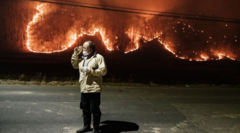
The wildfires raging across South Korea have been described by experts as the most devastating in the nation's history, primarily fueled by a deadly mix of dry conditions, intense winds, and abundant pine forests. As of Thursday, the infernos have consumed 35,810 hectares (88,500 acres), translating to roughly half the size of New York City, leading to the deaths of 27 people and displacing thousands.
Officials indicate that human activity sparked the fires, but it is the combination of dry terrain and strong winds sweeping through inland regions that has transformed the situation into a crisis. North Gyeongsang Province, where the fires are most intense, features dense pine forests that exacerbate the fire's ferocity due to the resinous composition of these trees, which acts like fuel.
Lee Byung-doo from the National Institute of Forest Science highlighted the role of pine trees in igniting wildfires, explaining that the resin they contain can make fires burn faster and longer. The area’s forests, characterized by vast numbers of pine trees, have created an environment particularly susceptible to such disasters. The trees also endure winter needles, making them prone to "crown fires" that ignite the upper canopy, contributing to the swift spread of flames.
While neighboring nations like China and North Korea have experienced forest depletion, South Korea has increased its forestry coverage over recent years, leading to a backlog of decomposed leaves and pine that now fuels wildfires further. Experts point to climate change as another significant factor driving the unprecedented scale of these wildfires. According to South Korea's disaster chief Lee Han-kyung, this episode starkly illustrates the urgent realities brought on by the climate crisis.
Recent weeks have seen temperature surges above 20C (68F), a remarkable anomaly for spring seasons, making such high temperatures five times more probable due to global warming, as indicated by Climate Central experts. The dry heat also fostered conditions for rapid fire spread, exacerbated by strong winds. The thick vegetation and gusty conditions have presented serious challenges for firefighting efforts. Tragically, a 73-year-old pilot lost his life when a firefighting helicopter crashed in the affected region.
In a society marked by an aging population—where one in five inhabitants is at least 65 years old—the death toll from these fires has been substantial, especially among older adults who often struggle with mobility and comprehension during emergency evacuations. This is particularly evident in North Gyeongsang province, home to many elderly residents. Recent reports disclose that three elderly individuals in an evacuation vehicle were killed when flames engulfed their car, showcasing the dire circumstances many face.
Acting President Han Duck-soo expressed concern over the vulnerability of the elderly, directing the interior minister to supervise disaster relief efforts in the ravaged area. Residents affected by the fires have described their panic in evacuating with little to no belongings, underlining the unexpected nature of the disaster. Cultural heritage has also taken a significant hit, with historic relics—including ancient temples over a millennium old—falling prey to the rampaging flames.
As the nation continues to confront these harrowing wildfires, the need for effective management, emergency response, and comprehensive support for affected residents remains urgent.