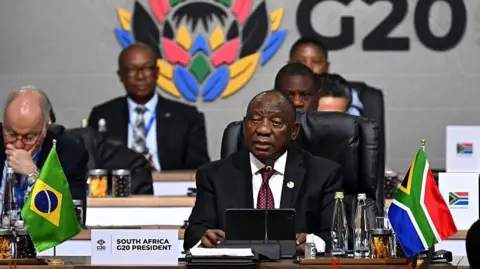
As South Africa seeks to engage its famously wealthy citizen, Elon Musk, for investment, tensions are escalating over the country's ownership laws. President Cyril Ramaphosa has expressed a strong interest in having Musk invest his vast wealth in South Africa. However, the businessman has voiced significant criticism regarding the nation's legislation requiring foreign entities to offer ownership stakes to Black South Africans, arguing these regulations are fundamentally discriminatory and hinder the operations of his satellite internet service, Starlink.
In response to these tensions, telecommunications official Solly Malatsi is working on a proposal intended to facilitate Starlink’s entry into the South African market. Instead of adhering to the existing requirement for Black ownership, Malatsi's plan suggests that satellite providers could secure operational licenses by committing directly to invest in disadvantaged communities. This change would sidestep the traditional equity-sharing mandate that has drawn Musk's ire.
Before the new directive can be officially enacted, it must pass through a public consultation phase with the Independent Communications Authority of South Africa, the body responsible for overseeing telecommunications regulations within the country.
Critics of Malatsi's proposed measures suggest that this potential easing of ownership requirements undermines the progress made towards rectifying racial inequalities rooted in apartheid. They argue that appeasing Musk, who has spent little time in South Africa since leaving as a teen, does not address the systemic issues that continue to affect marginalized groups in the nation.
As this story develops, stakeholders across the spectrum will closely watch how South Africa navigates its relationship with one of its most prominent expatriates while attempting to balance historical equity with the promise of technological advancement.